Showing posts with label writing. Show all posts

Sunday, January 23, 2022

Some Thoughts on a Thousand Days of Journal Writing

It's a milestone
with more milestones to hit in the future.
To be clear, it’s not that I started my journal one thousand days ago. I started my journal 15,960 days ago,[1] during which time (by one means or another), I have written 6,301 entries covering 4,607 days, which means the lifetime average for my journal is 29%. It would probably go up a little if I separated out a few of the entries in which I caught up on my journal after a few days of not writing any entries. The number would be much higher if I had written more frequently,[2] and a bit smaller if I didn’t re-create an entry from time to time.[3]

I must have done
something, but what?

All that to say that I may not be the best person to be a guide to diligent journaling, something I’ve only accomplished since about July 2018.[4] On the other hand, as I look at my journal, I have nothing from July 11, 1999 and July 22, 2000. It’s worse than that. Every entry in my journal from May 11, 1998 to August 31, 2000 (843 days) is a re-creation, cobbled from photos, calendar entries, or whatever else I could get to show what I was doing on a certain day.

And yet, I’ve kept at it for the last thousand days. It was an evolving process, from missing years to that period between July 2019 and April 2019 where I missed a total of six days out of 303. Not too shabby. How did I get there?

For me, the big answer was going digital. No longer was it a question of finding pen and paper. No longer was it a problem that it was too dark to write. One of the major aspects of getting this done is that my digital journal[5] keeps track of how many consecutive day on which I’ve written a journal entry. With that kind of monitoring, you just don’t want to see that go back to zero. Writing in your journal daily can become a habit, but I can’t tell you how many days it takes to establish that habit. When Day One introduced streaks, I didn’t think it was going to be my favorite feature.

Not only can you see how many
consecutive days you've written,
you also can look back. 

Daily writing was the habit I wanted to establish. There are so many entries in my journal where I apologize to myself for missing some days, weeks, or months. (The year-long gaps start with a resolution to keep a journal, not to keep one on a regular basis.) If only that lovely blank book could have reminded me to it (apps can, of course). Besides having an app nag you about this (I could set a reminder), the other valuable thing I’ve found is having a certain mindset about my journal. What is this for? I have a few answers.

Well, that doesn't look like
a busy month.

I do value my journal as a chronicle of what I’ve done over the years. What did I do on January 23, 1982? I know, though the day (according to my entry) was pretty unmemorable.[6] How about March 23, 1982. No idea. I don’t have an entry. I wish I had, but I can’t go back in time and get myself to do better at journaling.[7]

It’s also a handy space in which to write, knowing that no one else is going to see it. I can explore narrative in it, wondering how describe things so that they’ll make sense to me later, especially when there are things that overlap. How do you write about that?

In one of the many books I have on writing, one of them says that unless you’re planning on writing a memoir keeping a journal is useless. I’m not the expert on being a financially successful writer. I still feel that writers should keep journal. First, there’s the awareness that many good writers who kept journal extensively. If it’s a bad idea, why did Christopher Isherwood turn out three volumes of published journals? It gives something to write. When you’re not up for writing a poem, a story, a novel[8], you can always get those words moving with a journal entry. You may not know what the characters are going to do next, but you might have an idea what you did last.

So you want to be a consistent journal writer? The best I can suggest is that you identify whatever obstacles there are to you getting a journal entry written and that you set aside time every day to work on your journal. This is not a “find time” sort of thing,[9] but a “make time” sort of thing. You have to make time for the things that are important or they will get squeezed out. Prioritize, find some, time, and best of luck in getting to a thousand consecutive days.


  1. Specifically, May 14, 1978.  ↩

  2. There is a lost volume, but the last time I saw it, it noted in my journal that it had only three entries in it.  ↩

  3. As in “while composing this entry,” which means some of the numbers are already out of date.  ↩

  4. Yes, July 2018 is more than one thousand days before this post was written. In 2018, I finally managed the trick of missing no more than a single day in a month. My entries are pretty regular from 2014 onward.  ↩

  5. I have been using Day One for more than a decade.  ↩

  6. January 23 has been memorable in some years, but 1982 was not one of them.  ↩

  7. If they invent time travel, I have a list ready of advice for younger me, some of which is “don’t have sex with that guy or that guy either,” but also “please write in your journal daily.”  ↩

  8. Should I add “blog post”? Yeah, let’s add blog post.  ↩

  9. Time is never found.  ↩


You can follow my blog on Twitter (@impofthediverse) or on Facebook. If you like this post, share it with your friends. If you have a comment just for me, e-mail me at impofthediverse@gmail.com.
This blog runs solely on ego! Follow this blog! Comment on this post! Let me know that you want to read more of it!

Respect Your Local Copy Editor

Don’t do this. I beg you.
I’ve recently been engaged in a couple of discussions in which people talked about their idiosyncratic views on punctuation. I have to start by admitting that unless you’re a publisher (or a copyeditor working for a publisher) I don’t actually care what your views on punctuation are. This might be harsh, but it’s true. It’s like if you decided that epitome ought to be spelled phonetically and damn what dictionary said, you were going to do it.[1] If you want to have people care about your views on punctuation, then become a publisher (or the head of a publisher’s copy editing department). Then you’ll have a real opinion. An enforceable opinion.[2] Other than that well, you’re just someone who makes trouble for copy editors. And I’m telling you not to do that.

When someone asks my opinion of how something should be punctuated, I typically go for finding out what the general practice is. In other words, I look at some major style guides and do exactly what they says. If I disagree with that style guide, I’ll do exactly what it says. Again, if you’re publishing your own stuff you can do whatever you damn well please, but if you want someone else to publish your stuff you’d better follow how they want it formatted. Let me give a couple examples:

Some noted authorities.

Should there be one or two spaces after at the end of a sentence?
(Spoiler alert: it’s one.[3]) The choice of one or two spaces represents two separate attempts to emulate typeset material while using a typewriter. When the typewriter was introduced, most books published in English used what is called loose spacing, there’s a lot of space after the end of a sentence. An em space, which is — wide. Books in that era often had generous margins and gutters too. Beautiful pages that really don’t have a lot of type on them. To emulate this on a typewriter, typists hit an additional space after the end of each sentence.

The French style was for tight spacing. They formatted their pages without a lot of space after a sentence. More than an en space –, but less than an em.[4] The idea was to create a page of uniform text color. And text color adds up to gray. Think of it as how a page would look if you took a badly focused photo of it. The French wanted it uniform, the English and Americans wanted it non-uniform, with little holes in their text. Then came World War II.[5]

With paper shortages due to the war, there was a desire to cram as many words onto the page as possible. Goodbye gutters. Goodbye margins. Goodbye extra space after sentence. They were probably people who wanted to go to the old style of page design after the war. The answer to them was no. The war had come, the war had gone, but French spacing was here to stay.[6]

In the late 80s came the desktop publishing revolution. I was in that revolution. In the mid–1980s I was doing desktop publishing. I have produced camera ready copy. In order to make the camera-ready copy look like something that was set in physical type, I needed to emulate tight spacing. When I learn to type, I learned two spaces after the end of each sentence. Only a few years later I was retraining myself to type on the single space after each sentence. But it’s just a convention.

A few years ago I took an extension class for which the professor insisted that all papers needed to have two spaces after each period. Her class, her rules. That said, I had to retrain myself (again) to be able to type that way.[7] She admitted that her own editor chided her for sending in manuscripts with two spaces after a period, though in these days of digital submission, at least that’s an easy find and replace. Find all double spaces and convert them to a single space. But the question still occurs to me that if you want to have your stuff published why would you make them do this extra step? For those who say they can’t this do, I wonder what they when typing abbreviations. Do they type an extra space after Dr., Mr., or oz.?

Onward to one of the other type of graphic conundrums, the quotation mark. Should commas and periods go inside or outside quotation marks? We return to our noted authorities and the rules are pretty clear. Generally. The American convention is that all the small punctuation (commas and periods) slide in under the closing quotation mark. It’s tidier. The British convention is to place punctuation outside the closing quotation mark. They also use single quotation marks where American use double.

Like Benjamin Dreyer, I agree there’s a certain sense to British practice, but there’s also a certain sense to American practice. To quote Dryer: “I find the sight of those periods and commas hanging outside tuition marks saddening.”[8] It creates this ugly little notch of white space, between the last word and the punctuation mark. To me it makes the punctuation a bit unconnected from its sentence. There’s not a lot of visual difference between a comma after a quotation mark (word”,) and one with an extra space before it (word ,). In The Elements of Style we find: Typographical usage dictates that the comma be inside the marks, though logically it often seems not to belong there.[9] This is likely one of E. B. White’s additions, as it does not appear in Strunk’s edition of 1917.[10]

You (who do this: ”.) are here.
If you’re an American putting your commas and periods outside double quotation marks, you’re using neither system. It puts you in the middle, I guess, south of Greenland and bit east of St. Pierre and Miquelon.[11] If that leaves you all wet, it’s not my fault.


If you’re an American using British punctuation convention,[12] are you also using British spellings? I thought not. I have not checked with any copyeditor on this question, but I suspect that if you’re an American who is submitting to an American publication using own version of quotation marks and end punctuation, the copy editor will hate you. Treat the copyeditor right. Do you really want someone to go through your entire manuscript marking a circled tr every time you have a quotation mark with a comma or a period?

All this said, all other punctuation stays on one side or the other of a quotation mark, depending on its source.

“Edward E. Tanner III (Patrick Dennis), better known for Auntie Mame, collaborated on the memoir Guestward Ho!” The exclamation mark is from Tanner and Barbara Hooton, not me.

Be good to your copy editor. If you want to break out of the herd, do it with your writing, not your arrangement of spaces or quotation marks.

A final thought on citation formats. While there clear practices on spaces after sentences (one) and periods and commas with closing quotation marks (the quotation mark goes last) when I worked for a researcher it seemed almost that every journal had its own house citation format, none of which agreed with the MLA style I learned in college. No one ever debates these. Those who are writing for publications with house guidelines for citations just follow them. Do as they do. Follow the rules.

[Post in haste, edit later. I've given this post a bit of copy editing. It could probably use more.]


  1. Would that be “aypitomee”? I’m not sure.  ↩

  2. Please—I beg you—do not make “aypitomee” part of your house style guide.  ↩

  3. Why do I say “one”? I checked submission guides. Editors have the issue that if all submissions are produced under the same guidelines, they can figure out how things will go on a page before they get there. Two spaces mess this up. And they have to go through and take them out.  ↩

  4. The em space and dash get their name from being the width of a M. The en space and dash get their name from being the width of an N. (But it’s usually half an em.) While you’re down here, the em dash, en dash, and hyphens (the narrowest of them) have specific uses. En dashes are good to separate dates, so 1708–1742, not 1708–1742.  ↩

  5. WWII was not fought over typographic standards, though prior to WWII, the Nazi Party had banned blackletter types (which Hitler thought Jewish) going for more modern typefaces, particularly san-serifs. The Fraktur types were the typographic continuation of textura, which Renaissance scribes called “Gothic,” because they thought it came from Germany (it developed in Italy). “Roman” hands were from the Carolingian Empire, that is, they came from Germany.  ↩

  6. Seriously. Page margins you could put a thumb into and never worry that you were going to cover the text.  ↩

  7. Any typing I did that wasn’t for class had one space after each sentence (well, not at the end of paragraphs, of course), so retraining to never again type two spaces after a sentence was easy.  ↩

  8. Dryer, Benjamin. Dryer’s English (New York: Random House, 2019), 83.  ↩

  9. Strunk, Willam F., and E. B. White. The Elements of Style, 3rd ed.(New York: Macmillan, 1979), 36. Repeated in the 4th edition (Needham Heights, Massachusetts: Allyn & Bacon, 2000) with an update in the examples, still on page 36.  ↩

  10. https://gutenberg.org/ebooks/37134  ↩

  11. I chose midway between New York and London. I’m not trying to claim that these are the two poles of the English language, although they are two major centers (centres if you’re British) of publishing in the English-speaking world. (No disrespect intended to Toronto or Sydney.)  ↩

  12. Let’s dismiss the perception that British English is somehow “more correct” than American English. Not only is “more correct” not really a thing, British claims of American linguistic novelty are usually unsupported by history. The spellings “color” and “honor” were perfectly acceptable to the typesetters of the First Folio (Shakespeare’s collected plays, 1623), at which point there was no United States.  ↩


You can follow my blog on Twitter (@impofthediverse) or on Facebook. If you like this post, share it with your friends. If you have a comment just for me, e-mail me at impofthediverse@gmail.com.
This blog runs solely on ego! Follow this blog! Comment on this post! Let me know that you want to read more of it!

Thursday, December 17, 2020

Filling in the Journal

What can happen in 600 days?

I have been, over the years, an indifferent diarist. Although I started my journal more than forty-two years ago, there are huge chunks of time without a single entry. But okay, I mean, what really can happen over a mere 728 days?[1]

Yeah, if I could go back in time,[2] I would convince myself that even if I wrote a few words a day, it would be better than writing nothing. It probably wouldn’t do any good, since the intention of writing every day was always there, but sometimes it just wasn’t possible.

It’d be late and and I’d be in the dark.[3] The ride would be too bumpy to reliably mark things down. I’d forget where I put my journal.[4] I’d go a trip certain that I was going to keep a journal, but then leave my journal at home (which is better than leaving it in a hotel, never to be seen again). It is quick and easy to not get a journal entry written.

Hard to search through these

Over the years, I filled (at least) eighteen notebooks to some degree of completion.[5] That’s it, barring some forgotten volume resurfacing. I have finally transcribed the lot of them, in some cases replacing bad handwriting with bad typing, so I will probably revisit the volumes from time to time, when I look at an old entry and say, “just what the hell did I actually write here?” Now comes the next phase. It’s time to fill in the gaps. I have a plan.

Now, because I have been a less-than-diligent diarist, these are the things I must do:

See what I wrote elsewhere. For those times when I didn’t write a journal entry, sometimes I wrote something about it elsewhere. A zine.[6] An email. A social-media post. Time to check my words. I’ve been delighted to find that some of the gaps in my journal have already been written.

Like this one

See what I shot.
There have been plenty of occasions where I didn’t jot anything down on a trip[7] but I did take lots of photos. That’ll jog your memory. If nothing else, they provide a simple guide to what I did that day, akin to a one-line journal entry. “Went to the museum” is better than just a blank.

What can I remember? And in the absence of any documentary evidence, there’s always the chance association. Every once in a while, I’ll remember something and—aware that there is no corresponding journal entry—jot down what I remember. Sure, this is nothing like a contemporaneous entry, but it’s better than nothing. (I also mark these as such, since they are memories.) What you remember today might slip from memory.[8]

You can’t bring back the past. There no do-overs,[9] but there is a chance—even after the fact—to improve on spotty journaling practices.


  1. That’s the gap between my last entry in 1983 and my first entry in 1985. I mean, yes, that’s almost the entirety of a relationship I had with a boyfriend and included two changes of address, but really.  ↩

  2. There’s this fantasy of avoiding some great personal screw-up, but some of those unpleasant events led me to today, so I’ll settle for the lesser goal of not avoiding them, but at least chronicling them.  ↩

  3. You can’t write in bed in the dark with pen and ink. I’ve tried.  ↩

  4. One journal entry celebrates finding my journal after it went astray at the end of a trip. Had I left it in another country? If I had lost it, I might have now forgotten it existed.  ↩

  5. One early volume is lost, though when I last saw it, I did note that it spanned all of three days before I put it aside, only picking it up again after I had started a new one. I don’t think I’ve seen it since. It could turn up.  ↩

  6. Yeah, I used to do that.  ↩

  7. See above with journals that didn’t make it along for a trip.  ↩

  8. There have been times when I’ve remembered something with great clarity but have not been able to jot it down, only to draw a blank later as those memories had sunk into the background.  ↩

  9. As nice as that might be in some cases. Oh, here are some mistakes I would undo. ↩


You can follow my blog on Twitter (@impofthediverse) or on Facebook. If you like this post, share it with your friends. If you have a comment just for me, e-mail me at impofthediverse@gmail.com.
This blog runs solely on ego! Follow this blog! Comment on this post! Let me know that you want to read more of it!

Saturday, December 28, 2019

The Non-Writing Life

I do use one of these
occasionally, though most of my
writing is done electronically
these days.
I recently got a message from someone who pointed out that as long as he had known me (about forty years), I had been writing. What it showed to me was how much we had fallen out of touch. To be clear, he hasn’t known me for forty years; he knew me for about four years, but we had a falling out (partially my fault[1]) about thirty-six years ago. Truth be told, it’s not like he’s some unique individual from this era. I’ve lost contact with just about everyone I knew back then.

I met this friend[2] when we were in our teens. I was an avid science fiction fan, and like many science fiction fans, I wanted to write science fiction too. My journal from that time repeatedly names stories I was working on, with some indications that they’re fantasy or science fiction. All these stories are now long lost and while there are some lost things I really wish I still had, the stories I wrote in my teens are not all that important to me.

We’ve had sporadic contact since then, much to my disappointment.[3] We briefly connected on Facebook, but I’m pretty certain he left that to become inactive on Google+.[4] We also connected on LinkedIn, which I joined about a year alter when I was job hunting. Later, when it became clear that I was not returning to the exciting world of in-house IT support,[5] I changed my profile to say that I am a freelance writer.[6] I’d like us to be friends again. I’d also like to be slightly taller,[7] and have my hair back. They can do things about hair, though I haven’t bothered. But I’m writing about writing here.[8]

Now we can construct a timeline:
We’re good friends and I’m writing. → That whole period he knows nothing about. → We’re barely acquaintances and I’m writing.

I was writing then, I’m writing now, I must have always been writing. Not so. There’s a gap. (In a way, this is somewhat comforting, given my scant publication record[9].)

Let’s talk about that whole period he knows nothing about. Let’s wind back thirty-eight years. There was an end to a lot of writing in 1983. I stopped trying to write stories. There’s about a two-year gap in my journal writing. I did keep writing zines during time for two amateur press associations.[10] But no fiction writing. Then the apas stopped. One grew increasingly hostile to the presence of an out gay man. The other was nothing but gay men, but it eventually died. And then, all I was writing was my journal.

No fiction.[11] Life got busy. I had dropped out of college and entered the work world. The spare moments I had for writing evaporated. No more filling an hour between classes by grabbing a desk in the library and scribbling away. There are people who write while holding down a full-time job,[12] but maybe not while holding down a full-time job, looking for an apartment, and navigating the beginnings of a romantic life. There I was, early 20s, insecure and inexperienced, finally meeting other gay men. Certainly a distraction from writing.[13]

I also became one of the founders of a group for LGBTQ[14] science fiction fans. That took up a lot of time, especially as the group started to grow and we started running our own conventions.[15] I moved and had to start job hunting all over again. Writing looked like it was permanently pushed to the back burner.

How long is the gap? About eighteen years. I didn’t start writing again until 2001. I had some ideas and started writing. I even had a plan establish my chops with some short stories and build from there. I had come to the conclusion that I just didn’t have the turn of mind to write fantasy or science fiction,[16] so my new attempts were erotica. This was just as adult magazines started folding, due to the ready availability of porn on the Internet. My potential market had dried up.

I turned to writing a novel. Why not? I had an idea. It was clearly something that would need to be worked out at the length of a novel to get everything I wanted on it. I proceeded then to hammer away at it over the next fifteen years. After fifteen years, I had an unfinished novel that really wasn’t compelling enough to keep working on.[17] Also, work just kept getting busier and busier. I found that after pulling lots of overtime, when I tried to write all my characters wanted was to pour a glass of wine, put their feet up, and watch some tv.

I really salute the people who hold down full-time day jobs while managing to write after work and on weekends. I have no idea how they manage it. My experience was that I’d look forward to some writing time only to find that I’d be working overtime due to some crisis at the office. On so many weekends, I’d see my chance for getting some writing done recede into the distance. Then my job was eliminated.

My new job was “job seeker,” but it really wasn’t an eight-hour-a-day position. The résumé was fine tuned. I scanned through job postings. Early on I did my online sessions with an employment counselor (one of my severance benefits). I also wasted some time just frustrated and unhappy. Then I got back to writing.

One of the early projects was this blog, in part to rediscover my own voice (after years of writing corporate speak), in part to see if I could write at least a thousand words a day.[18] As the blogging gave me more practice and confidence in my voice, I returned to writing fiction. After a while (and a wholly unsuccessful job hunt), my husband agreed to let me just focus on that. The job hunt was over.

I’ve kept at it. I’ve turned out some stories, one of which I even managed to sell. Sure, there have also been some times when life’s demands have slowed this down or even stopped. But I keep writing. I think I’m going to get there.

p.s.: If you’re reading this, you know who you are. Send me some emails. Please. After all, this post is for you, whether you read it not.

Minor personal update: I was curious and looked through some old emails. I told him in 1999 that I wasn’t writing. Just before I got back to it.


  1. Tough time in my life. It was when I came out. I was a bit of an emotional wreck, which was tough on me and lots of people around me too. It was also a period of transition for me, since I still have contact with people I met not long after. My belated apologies to all those whose patience was pushed past the limit.  ↩
  2. “Friend” seems a slightly inaccurate term, since we haven’t spoken in thirty-six years, we swapped a few emails some years ago (he owes me one), but to call him a “former friend” would just make me feel sad.  ↩
  3. This post is some of the stuff I’d want to tell him, but since communication is unlikely, I figured I’d get it off my chest this way. Look, if you’re reading this, you know who you are, you know what to do. You have my email address. Answer the email I sent you. It’s wholly unlikely he’ll actually ever see this blog post. Truth be told, I don’t think he’s interested in putting in the effort.  ↩
  4. Remember Google+? Sure, you might now. I don’t think we’re far away from people wondering if they had accounts there or no. “Yeah, maybe I was on it, I’m not sure.”  ↩
  5. Your browser may not be equipped to properly display sarcasm tags.  ↩
  6. It’s a largely unpaid position.  ↩
  7. If I woke up at average height, the need to buy a whole new set of pants wouldn’t bother me that much.  ↩
  8. My belated apologies to all those whose patience was pushed past the limit.
  9. As opposed to getting maudlin about a lost friendship.  ↩
  10. That is, one story, though part of that is for lack of trying. (Maybe that’s fodder for another blog post.) The story is “Shotgun” in the anthology THCock. It makes a fine gift for any gay stoner you might feel comfortable giving erotica to.   ↩
  11. If you are unaware of what an amateur press association is, best to think of it as a group blog of the pre-Internet era. They were obscure then, more so now. My blog stats are pretty minimal (thank you, oh kind reader). These were even more limited, read only by the participants. I need to mine them for whatever comments I made about my life during the time when I wasn’t keeping a journal.  ↩
  12. Sure, my journal is just my point of view, not an objective account of my life, but it is as truthful a narrative as I can make it.  ↩
  13. I salute these intrepid souls.  ↩
  14. I think if the options are find a quiet corner and work on a story or have sex, it’s a pretty obvious choice.  ↩
  15. I admit the anachronism here. When the group started, the term transgender had not yet been coined. The initialism g/l was prevalent, soon supplanted by lgb. The Gaylaxians were open all, without regard to sexual orientation.  ↩
  16. Which persist. The first Gaylaxicon was in 1988, the most recent one in 2019, though I haven’t been to one in years.  ↩
  17. I do keep trying. I even brought a fantasy piece to a writing workshop where the professor praised it for some good and inventive writing (yeah!) then completely eviscerated it (no!). As she pointed out, the best part didn’t even belong in the story.  ↩
  18. In part, it was probably a victim of my own inexperience. After countless restarts and revisions, I sapped the life out of it. Plus, I really should have outlined the whole thing, instead of trying to just write it organically.  ↩
  19. Yes, though a thousand words of blogging (which I’ve already passed in this post) is a lot easier for me than a thousand words of fiction.  ↩

You can follow my blog on Twitter (@impofthediverse) or on Facebook. If you like this post, share it with your friends. If you have a comment just for me, e-mail me at impofthediverse@gmail.com.
This blog runs solely on ego! Follow this blog! Comment on this post! Let me know that you want to read more of it!

Monday, May 8, 2017

Nay to Née

Né? Not for me!
I tend to be fairly conservative in language, preferring the tried-and-true to the innovative, but there is one point where I have to draw the line. There may have been an era in which the use of the French word née didn’t come off as affected or pretentious. We are no longer in that era.

Worse yet, the only times I ever see it, it’s been misused. There are multiple forms. In French there are times in which you would write not only né and née, but also •nés* and nées. It’s just the French word for “born” (that is, the past participle of the verb naître). As a convention in English, it’s acquired the meaning of “born under the name of,” and it’s typically used to indicate that some man is performing under a name other than that with which he was born.


You can follow my blog on Twitter (@impofthediverse) or on Facebook. If you like this post, share it with your friends. If you have a comment just for me, e-mail me at impofthediverse@gmail.com.
This blog runs solely on ego! Follow this blog! Comment on this post! Let me know that you want to read more of it!

Sunday, May 1, 2016

Second Blogaversary

Two years!
It’s been two years. On May 1, 2014, I wrote my first post on this blog and on May 1, 2015 wrote a followup. If the first year of the blog was filled with great hopes, the second year, reality set in. In the first year of the blog, I turned out 528 posts (more than one a day), but in the second year, I turned to other things, and only wrote a further 103 posts (call it one every three and a half days). Ouch. What happened?

Mostly I was busy. I started the blog with a few things in mind, although there was the hope that somehow the blog would bring me an ever-increasing readership. This is not the case. If you’re reading this post, you’re one of the few. Be proud of it. After a few months, in anticipation of the coming readership, I started serving ads on the page, but at my current readership, that should pay off sometime in 2034 (and then again in 2054).

One of my goals was to recapture my own voice, to make this blog sound like me. In my prior life, I did a lot of corporate writing, and I found that when I got home I would be writing in that same corporate speak. Who wants to read that? Not even the recipients of those corporate screeds really wanted to be reading it, but that’s what I had to write. I am happy to say, in that respect, the blog has done its job and I am writing something that is my own voice, for better or worse.


You can follow my blog on Twitter (@impofthediverse) or on Facebook. If you like this post, share it with your friends. If you have a comment just for me, e-mail me at impofthediverse@gmail.com.
This blog runs solely on ego! Follow this blog! Comment on this post! Let me know that you want to read more of it!

Monday, January 18, 2016

Longhand Writing in a Digital World

My writing tools.
The Pencil kept sliding down the iPad;
I had to position it high and shoot fast.
Longhand or keyboard? I won’t call this the eternal writers’ debate, since even into the early twentieth century, writers sent handwritten manuscripts to their publishers.[1] Don’t try that now. Even tin the era when publishers would still read a manuscript in yours or someone else’s handwriting,[2] some still sent their manuscripts to be typed (Oscar Wilde, for one). It doesn’t matter how beautiful your handwriting is, no publishers wants to see 5,000 or especially 80,000 words of it. I, for one, doubt my ability to turn out 5,000 words in fair hand, while I know I can type my handwritten draft quickly and easily. I like to draft my fiction longhand.

I need to issue a series of caveats here: I am not a professionally published writer; if everyone who has my stories were to show up at my house for an impromptu cocktail party, I could cope.[3] When I’m writing for my blog, I do not typically draft things out in longhand, but instead compose while typing in a word processing application. For this blog post, I took the atypical step of writing a draft out by hand at first. It would have been faster to just do my typical thing, but it would miss the point.[4]


You can follow my blog on Twitter (@impofthediverse) or on Facebook. If you like this post, share it with your friends. If you have a comment just for me, e-mail me at impofthediverse@gmail.com.
This blog runs solely on ego! Follow this blog! Comment on this post! Let me know that you want to read more of it!

Thursday, December 11, 2014

Advice to Novelists (circa 1916)

Who said that death of the hero has to be gloomy?
I never liked that Huck Finn guy anyway.
I’m working on a novel. Every once in a while, someone will tell me that she or he (more often she) wishes she (we’ll stick with that) were working on a novel. But it’s the easiest thing in the world! I always tell them to take a sheet a paper and write “Chapter One” at the top of the page. You are now officially working on a novel (you just haven’t gone very far).[1]

Like many an aspiring novelist, I am (generally) happy to get advice from anywhere.[2] I was happy to see that a letter in the Sun of December 11, 1916 offered some advice for novelists. I don’t know if Charles Hooper, of Seattle, Washington, had any particular expertise in the matter. There were several men named Charles Hooper in Seattle at the time, but none of them show any indication of being a reliable critic of novels, a streetcar conductor, a machinist, a tailor, although it’s not impossible that one of those was an astute critic of fiction.


You can follow my blog on Twitter (@impofthediverse) or on Facebook. If you like this post, share it with your friends. If you have a comment just for me, e-mail me at impofthediverse@gmail.com.
This blog runs solely on ego! Follow this blog! Comment on this post! Let me know that you want to read more of it!

Saturday, December 6, 2014

Princess Strikes Blow for Freedom of Writers

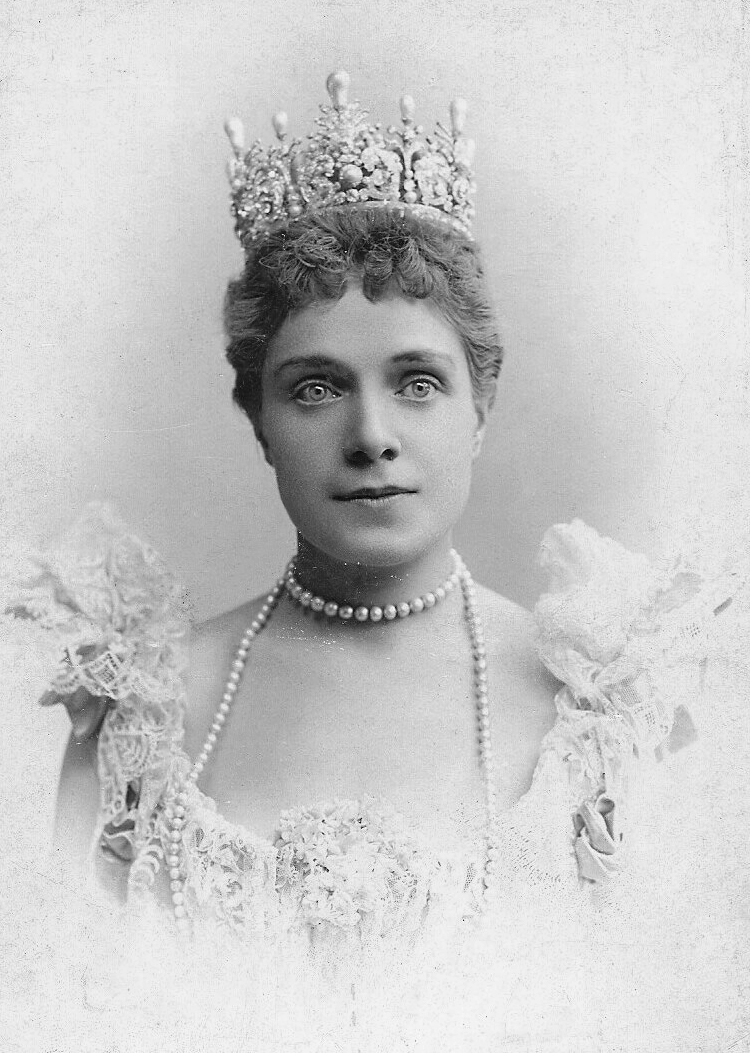
The Infanta Eulalia
in her writing tiara
It’s unusual for a member of a royal family to be supporting the independence of artists, but that’s what happened. In December 1911, the Infanta Eulalia defied the wishes of her nephew and went ahead with publishing a book. If you’re king, you get to boss your aunt around, whereas for the rest us, your father’s sister somewhat outranks you. Alfonso XIII was somewhat limited in what he could do about his aunt, according to the pair of articles in the December 6, 1911 Washington Herald, but he did hold the strings to the royal purse, and could cut off her allowance.

The king was fairly young, he was only twenty-five years old and had been king his entire life (his father died at the age of only twenty-seven)[1] His aunt, the Infanta Eulalia, was only forty-seven herself. The Wikipedia article on her uses the word “controversial” three times, twice in relationship to her books, one of which got her in the bad graces of her nephew in 1911.


You can follow my blog on Twitter (@impofthediverse) or on Facebook. If you like this post, share it with your friends. If you have a comment just for me, e-mail me at impofthediverse@gmail.com.
This blog runs solely on ego! Follow this blog! Comment on this post! Let me know that you want to read more of it!

Tuesday, November 18, 2014

Inside AdSense

Look at those numbers!
You may need a magnifying glass.
Lately, I’ve been reading a lot of blogs about blogging, which when described that way seems even more navel gazing than this one. Actually, they’re blog posts on monetizing your blog content, and they probably get more traffic than I do. (I admit it, when I realized that my major themes were going to be constructed languages, gay rights, and cooking, I wasn’t assuming that I’d get massive amounts of traffic.[1]) I have seen my traffic slowly grow over the last six months, although recently it took a big tumble that had me wondering just what was going wrong.

Let me digress for a moment (my blog, I get to, though I’d never know if you skipped to the next paragraph) and discuss the State of the Blog at about six months. This is my 353rd post and this is the 201st day after I started the blog,[2] working out to about one-and-three-quarter posts per day. I have been getting approximately two thousand hits to my blog each month, and as I noted in the previous paragraph, that has been slowly growing.


You can follow my blog on Twitter (@impofthediverse) or on Facebook. If you like this post, share it with your friends. If you have a comment just for me, e-mail me at impofthediverse@gmail.com.
This blog runs solely on ego! Follow this blog! Comment on this post! Let me know that you want to read more of it!

Thursday, July 3, 2014

Something Troubling at Blogger

I am well aware that if you're getting something for free, you're not the consumer, you're the product. Nevertheless, I had figured that Google had found other ways to monetize other people's work.

A digression: Not long after I started this blog, I was a party where I noted that I was blogging. "Oh, I hear you can make money doing that," said this friend of a friend. Maybe it is possible to make money at blogging, but I have come to conclude that it won't be me who's making it.

Google does have a program called AdSense that allows people to put ads on their pages. Every time someone reads your page, you get some tiny fraction of a cent (the term for this is an "impression," and advertisers buy impressions at a certain rate per thousand). If someone actually clicks on an ad, the web site gets a higher payout. It should be noted here that Google prohibits going to your own site and clicking your ads, or telling people, "hey, please click on my ads."


You can follow my blog on Twitter (@impofthediverse) or on Facebook. If you like this post, share it with your friends. If you have a comment just for me, e-mail me at impofthediverse@gmail.com.
This blog runs solely on ego! Follow this blog! Comment on this post! Let me know that you want to read more of it!
Related Posts Plugin for WordPress, Blogger...